
Delaware Statutory Trust · Evergreen · NAV-Based
The financial infrastructure for the next economy.
One governed vehicle that turns stewardship of land, water, and communities into durable, compounding returns. Reporting both NAV and Impact NAV.
The Imperative
From Extraction to Regeneration
The current economic model books short-term gains as profit while long-term systemic liabilities accumulate off the balance sheet. Natural capital is degraded, communities become fragile, and infrastructure becomes increasingly expensive to insure or replace.
When ecosystems, social fabric, or infrastructure cross critical thresholds, losses arrive suddenly and at scale — as write-downs, stranded assets, and supply-chain shocks. The fiduciary question is simple: hold the assets being repriced, or own the rail that channels capital into places where value is re-created.
The Core Insight
Regeneration is not a cost center. When you can measure, verify, and own the upside, regeneration becomes a superior alpha strategy — one that compounds value by improving the conditions that make all other portfolios possible.
Exhibit 01
Capital Evolution Model
Toggle: Extractive → Regenerative
Investment Structure
Three Coordinated Unit Classes
Investors participate through three distinct classes, each offering a different risk/return profile — all inside one Trust under a unified covenant and reporting standard.
Real Assets & Land
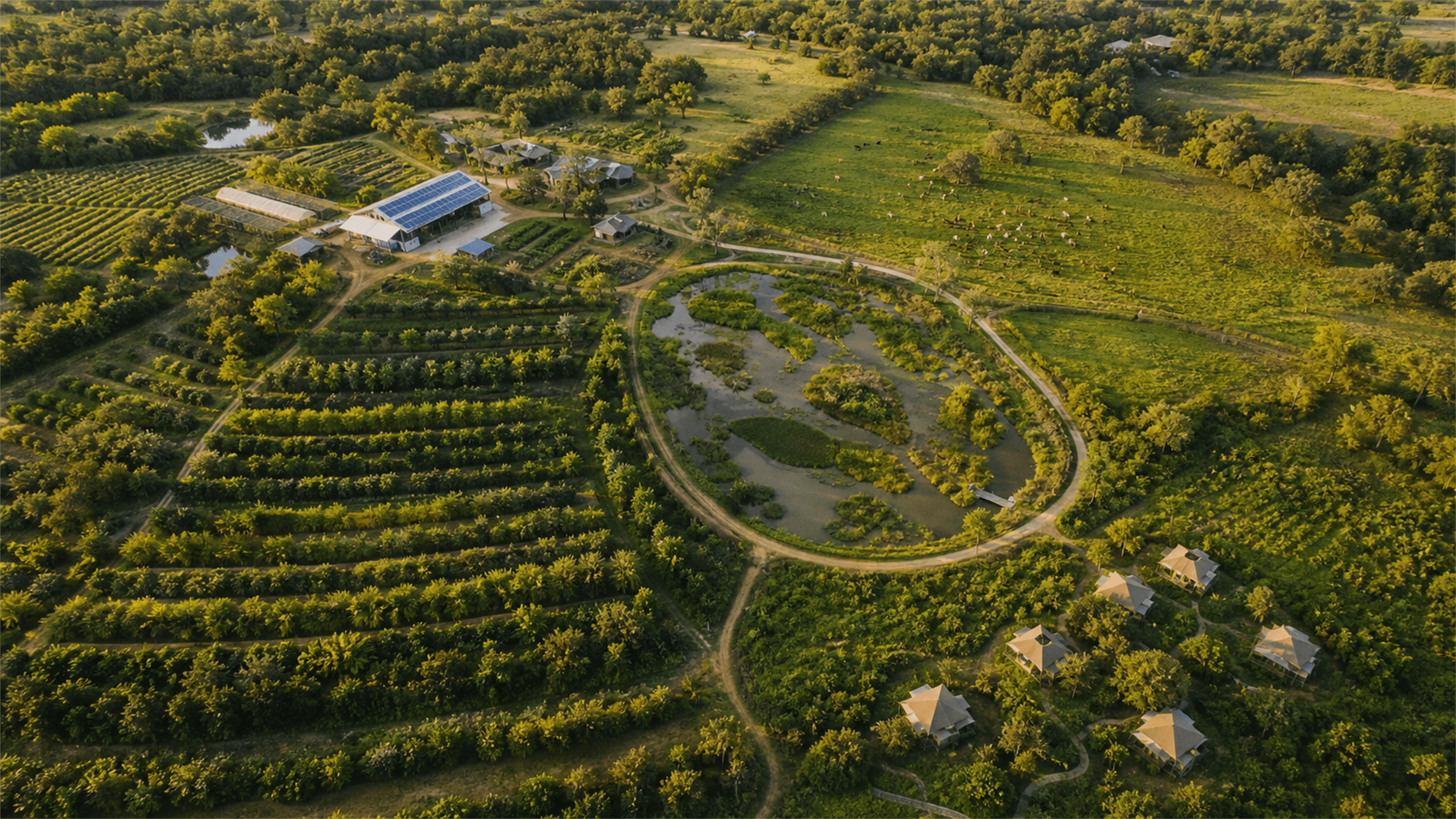
Land, regenerative districts, and climate-resilient infrastructure governed through Local Regenerative Land Trusts. Stewardship covenants ensure development emerges from the landscape's own potential.
Stewardship & Credits
Verified ecological and social outcomes priced through the Regenerative Capital Credit System (RCCS). Measured across Five Capitals — Natural, Human, Social, Built, and Financial.
Enablers & Technology
AI platforms, education, data, and cultural infrastructure that scale and sustain regeneration. Hub: Regenerative Development Corporation — LIFE AI, Regenity, Future City Portal.
The Solution
A Single Governed Rail
Today, regenerative capital is fragmented. Philanthropic grants, concessional capital, project finance, and commercial equity all operate in separate silos — slowing deployment, increasing costs, and limiting scale.
PRT aggregates diverse capital sources into a unified Delaware Statutory Trust with consistent rules, measurement, and governance across all projects and partners.
How It Works →Dual Reporting
Traditional NAV and cash yield alongside Impact-NAV (INAV) that includes priced, verified regenerative credits.
Mission-Locked Governance
Land held in Local Regenerative Land Trusts with binding covenants. Credits governed by RCCS standards and multi-stakeholder oversight.
Readiness Gates
Capital released through four phases of regenerative development — slowing money where it needs care and speeding it where systems compound.
Compounding Flywheel
Returns distributed and recycled into further regeneration — upgrading infrastructure, expanding habitat, and deepening community capacity.
Credits Engine
Regenerative Capital Credit System
RCCS measures improvements across the Five Capitals and converts verified uplift into finance-grade credits — turning stewardship into perpetual net operating income.
Summary Terms
Investment at a Glance
All values are indicative design targets for discussion only. Final terms will be defined in the PPM and governing documents. Returns are illustrative and not guaranteed.
Own the Rail
PRT is seeking early commitments within the $200M–$500M initial capital raise to anchor regenerative communities, the RCCS credit rail, and enabling platforms.
Disclaimer: Returns are illustrative and not guaranteed. Participation is subject to legal, fiduciary, and regulatory review. This document is not an offer to sell securities. © 2023–2026 Regenerative Development Corporation and the Planetary Regenerative Trust.